Key Takeaways
| Goal | What to Do | Why it Works |
| Stop Forgetting | Use spaced repetition systems. | People forget 90% of what they learn in a week. |
| Work Quicker | Use AI agents to build drafts. | It saves you 20 hours on every big project. |
| Prove Results | Track business numbers, not just test scores. | Bosses want to see money saved or made. |
| Better Lessons | Make short, 5-minute chunks. | Human brains get tired after 10 minutes of slides. |
| Real Practice | Build scenarios with real choices. | Learning by doing is better than learning by reading. |
1. Why Teaching People is Different in 2026
The way we teach adults changed a lot. It is not about long videos anymore. It is not about boring slides with too many words. People are busy. They have phones that buzz all the time. Their brains are full. If you give them a one-hour course, they will hate it. They will click “next” as fast as they can. They do not learn anything that way.
Do you remember the last time you sat through a long meeting? You probably looked at your watch. You probably thought about lunch. This is what learners feel. In 2026, we stop doing that. We focus on what they need to do right now. We do not give them extra facts. We give them tools.
Good design is about being a partner. You are not just a person who makes a course. You are someone who fixes a problem. If a team is slow at sales, you fix that. If a team is making mistakes with safety, you fix that. You use a system. A system is a set of steps. It works every time. Some people call this a framework. We use the ADDIE system because it is like a map. It shows you where to go.

I once made a course for a bank. It was 60 pages of text. I thought I was smart. I was wrong. No one read it. They failed the test. I had to start over. I made it into five small games. Each game took three minutes. Everyone passed. The bank saved money. That was the day I learned my lesson. Big is not better. Useful is better.
Are you still making big courses? Do your learners like them? Probably not. We need to change. We need to be quick. We need to be smart. This is why we use systems like The ADDIE Architect. It helps you think before you build.
2. Using AI Agents to Do the Heavy Work
AI is not a toy in 2026. It is a worker. Think of AI as a helper who never sleeps. It does not get bored. It can read a 100-page book in one second. But you must tell it what to do. You must give it a good plan.
In the old days, we wrote every word ourselves. We spent weeks on scripts. Now, we use agents. An agent is a smart bot. It knows how to write for adults. You give the agent your goals. You tell it who the learners are. Then, the agent gives you a draft. It is not perfect. You still need to check it. But it saves you so much time.
Think about this question. Why do you spend five hours writing a quiz? An AI agent can do it in five minutes. It can write ten different versions. You pick the best one. This lets you focus on the big ideas. You can spend your time talking to the boss. You can spend your time helping the learners.
I use AI every day now. I have a bot that checks my work. It tells me if my sentences are too long. It tells me if the lesson is too hard. It is like having a second brain. You need a second brain in 2026. The work is too much for one person.
But be careful. Do not let the AI do everything. If you do, the course will feel cold. It will feel like a robot wrote it. Humans like to learn from humans. You must add your own stories. You must add your own jokes. The AI builds the house. You paint the walls and make it feel like home.
How much time do you spend on chores? Formatting slides is a chore. Writing meta tags is a chore. Let the bots do the chores. You do the thinking. That is how you stay a pro in 2026.
3. Skills Matter More Than Content
Content is everywhere. You can find any fact on the web. If someone wants to know how to use Excel, they go to YouTube. They do not need your 20-slide deck on “What is a Cell?” They need to know how to make a pivot table for their boss by 5 PM.
In 2026, we do not teach “topics.” We teach “skills.” A skill is something you can do. A topic is just something you know. Knowing is not doing. If I know how a car works, I can’t drive it. I need to practice driving.
We use a “Skills-First” plan. First, we ask the boss what the team needs to do. Maybe they need to be kinder to customers. Maybe they need to use a new tool. Then, we build the lesson around that one thing. We cut out everything else. If it does not help them do the job, it goes in the trash.
Here is a list of why skills are better:
- They help people get raises.
- They make the company more money.
- They are easy to test.
- They make learners feel proud.

I once worked with a group of doctors. They had to learn a new software. The old course showed them every button. It took four hours. The doctors hated it. They are busy people! I changed the course. I gave them a list of five tasks. “Do these five things in the software,” I said. They did them. They learned in 20 minutes. They were happy. Their boss was happy.
Do not be a person who dumps info on people. Be a person who gives them a new skill. Use a system to find the gap between what they do and what they need to do. That is the secret to good design.
4. Making ADDIE Work Much Faster
People used to say ADDIE is too slow. They said it takes months to finish. In 2026, that is not true. We make it move quick. We do not do one step at a time. we do many steps at once.
We call this parallel work. While you are analyzing the problem, you are also making a small test version. You show it to the learners right away. You ask them, “Does this help you?” If they say no, you change it. You do not wait until the end to find out it failed.
The ADDIE Architect helps with this. It gives you a way to speed up. You use templates. You use checklists. You do not start from zero every time. Starting from zero is for amateurs. Pros use a playbook.
Think about a cook. A great cook has a recipe. They do not guess how much salt to use. They follow the plan. But they also taste the food as they go. That is what you must do. Taste your course while you build it.
Here is how to be quick:
- Analyze fast: Spend two days, not two weeks.
- Design simple: Use a basic map.
- Develop with AI: Let the bots build the parts.
- Implement small: Try it with five people first.
- Evaluate always: Ask for feedback every day.

I once saw an ID spend six months on one course. By the time it was done, the software had changed! The course was useless. That is a waste of money. Do not let that be you. Work in small sprints. Build a little. Test a little. Then build more.
Speed is a skill. If you are quick, you can help more people. You can take on more jobs. You can make more money. But you must be quick without being messy. That is why the system is key.
5. Helping the Brain Remember Things
The human brain is a leaky bucket. You pour water in, and it leaks out the bottom. Most learners forget 50% of a lesson in one hour. They forget almost all of it in a week. This is a big problem. Why do we spend money on training if they forget it?
In 2026, we use brain science to stop the leaks. We use something called Spaced Repetition. This means we don’t just teach a thing once. We teach it on Monday. Then we send a text about it on Wednesday. Then we do a quick quiz on Friday. Then we check again in a month. This moves the info from short-term memory to long-term memory.
We also use “Chunking.” This is a simple word for making things small. A brain can only hold about four or five new things at once. If you give them ten things, they will drop them all.
What can you do?
- Make videos short: 3 minutes is the sweet spot.
- Use pictures: A good drawing is better than a page of text.
- Tell stories: People remember stories better than facts.
- Ask questions: Making the brain work helps it remember.
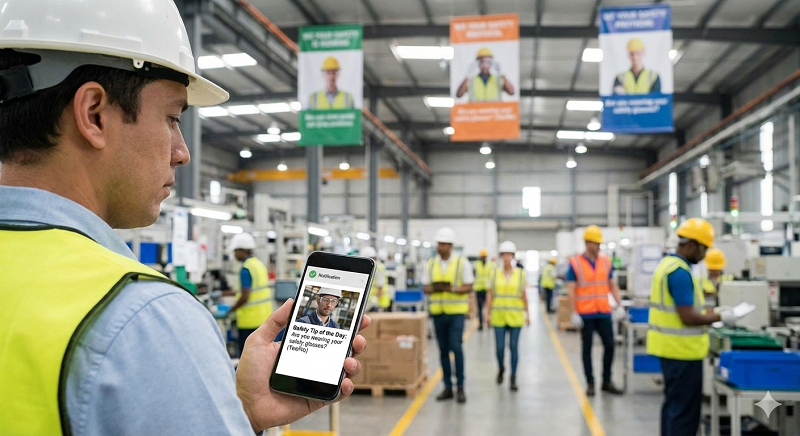
I have a friend who teaches safety. He used to show a long video of a factory. No one remembered the rules. Now, he sends a “Safety Tip of the Day” to their phones. It has one photo and one question. The factory is now much safer. People remember the tip because it is small and it comes to them often.
You must design for the brain. The brain is tired. The brain wants to sleep. You must wake it up. You must give it small bites of food, not a whole turkey at once. If you do this, your training will actually work.
6. Real Practice and Story Scenarios
Reading is not learning. Watching is not learning. Only doing is learning. In 2026, we put learners in the driver’s seat. We use scenarios. A scenario is a short story where the learner has to make a choice.
Imagine a course for a manager. You don’t tell them “Be nice to your team.” You give them a story. “Your best worker is late for the third time. What do you say?” Then you give them three choices. Each choice leads to a different result.
This is fun! People like games. They like to see what happens. If they make a bad choice, they see the worker get mad. They learn that their words matter. They learn without any real risk.
How do you build these?
- Find a real problem: Talk to the SMEs. Ask them what goes wrong most often.
- Create a character: Give them a name. Make them feel real.
- Offer hard choices: Do not make the right answer too easy.
- Show the result: Don’t just say “Correct.” Show the consequence.

I once built a scenario for a call center. The “customer” in the story was very angry. The learners had to calm him down. If they said the wrong thing, the customer would hang up. The learners loved it. They tried it over and over to get the “good” ending. They learned more from that 10-minute game than from a week of lectures.
Do you use scenarios? Or do you just use “True or False” questions? “True or False” is boring. It doesn’t test real life. Real life is messy. Your training should be a little messy too. It should feel like the job.
7. Measuring Success with Real Numbers
How do you know if your course is good? Most people look at the “Smile Sheet.” This is the survey at the end. It asks, “Did you like the trainer?” or “Was the lunch good?” This is useless. I don’t care if they liked the lunch. I care if they can do the job.
In 2026, we look at data. We use Kirkpatrick’s levels, but we focus on Level 4. Level 4 is about business results.
- Did sales go up?
- Did mistakes go down?
- Did people stay at the company longer?
- Did we save time?
You must talk to the boss about numbers before you start. Ask them, “What number do you want to change?” If they say, “We want fewer accidents,” then that is your goal. You track that number after the training. If the accidents go down, you are a hero. You can prove you are worth your pay.

I worked with a store once. They wanted to sell more shoes. I made a course on how to talk to customers about fit. We tracked the shoe sales for a month. Sales grew by 15%. I showed that to the owner. He gave me another project right away. He didn’t care about the quiz scores. He cared about the 15%.
Being a data person is part of the job now. You don’t need to be a math genius. You just need to care about the results. Use a system to track the “before” and “after.” If you can show the “after” is better, you will always have work.
8. Why People Still Matter Most
With all this AI and data, it is easy to forget about people. But people are why we do this. A machine can give facts. Only a human can give heart.
In 2026, the best designers focus on empathy. Empathy means you know how the learner feels. You know they are tired. You know they are worried about their job. You write your lessons with kindness. You use words that help, not words that judge.
We also focus on “Soft Skills.” This is a bad name for very important things. Like how to lead. How to listen. How to be a good teammate. AI is very bad at these things. Humans are very good at them. We need to spend more time teaching people how to be better humans.

I once had a learner who was very scared of technology. She thought she would lose her job. I didn’t just give her a manual. I sat with her. I made the lesson very simple. I gave her wins early on. By the end, she was crying because she was so happy. She could do it. No AI can do that.
Here is what makes a course “human”:
- Warmth: Use a friendly voice.
- Support: Give help when they get stuck.
- Community: Let them talk to other learners.
- Purpose: Tell them why this matters for their life.
Don’t be a robot. Be a person who uses robots to help other people. That is the best practice for 2026. If you do that, you will not just be a designer. You will be a leader. You will change lives. And that is the best job in the world.
Frequently Asked Questions
What is the ADDIE system in 2026?
It is still the same five steps: Analyze, Design, Develop, Implement, and Evaluate. But now we use AI to do the steps much quicker. We also do them at the same time instead of one by one.
Do I need to learn how to code to use AI?
No. You just need to know how to talk to it. You give it a plan and it does the work. Using a system like The ADDIE Architect helps you give the right plans to the AI.
Why are short lessons better?
Adults have a short attention span. If a lesson is too long, they stop paying attention. Short “chunks” of 3 to 5 minutes help them learn more in less time.
Can AI replace my job as a designer?
Not if you are a strategic designer. AI can write text and make slides. But it cannot talk to a boss to find a real problem. It cannot feel empathy for a struggling learner. You must do the “human” parts.
How do I prove my training works?
Look at the business numbers. If you are teaching sales, look at sales. If you are teaching safety, look at accident reports. Comparing the numbers from before and after the training is the best way to show it worked.
What is the biggest mistake designers make?
The biggest mistake is giving too much information. We call this a “brain dump.” Most people only need a small amount of info to do their job. If you give them too much, they forget everything. Keep it simple.